The thinking behind it
Learning is the most relatable thing there is
Somewhere along the way, school lost the relatable part. Kids got told what to do, in the same order, at the same speed, on the same worksheet, and a lot of them decided they were "not a math person" or "not a reader." The Living Method is how everything here is built to bring the relatable part back. Five ideas, all working at once.
It lives in a world
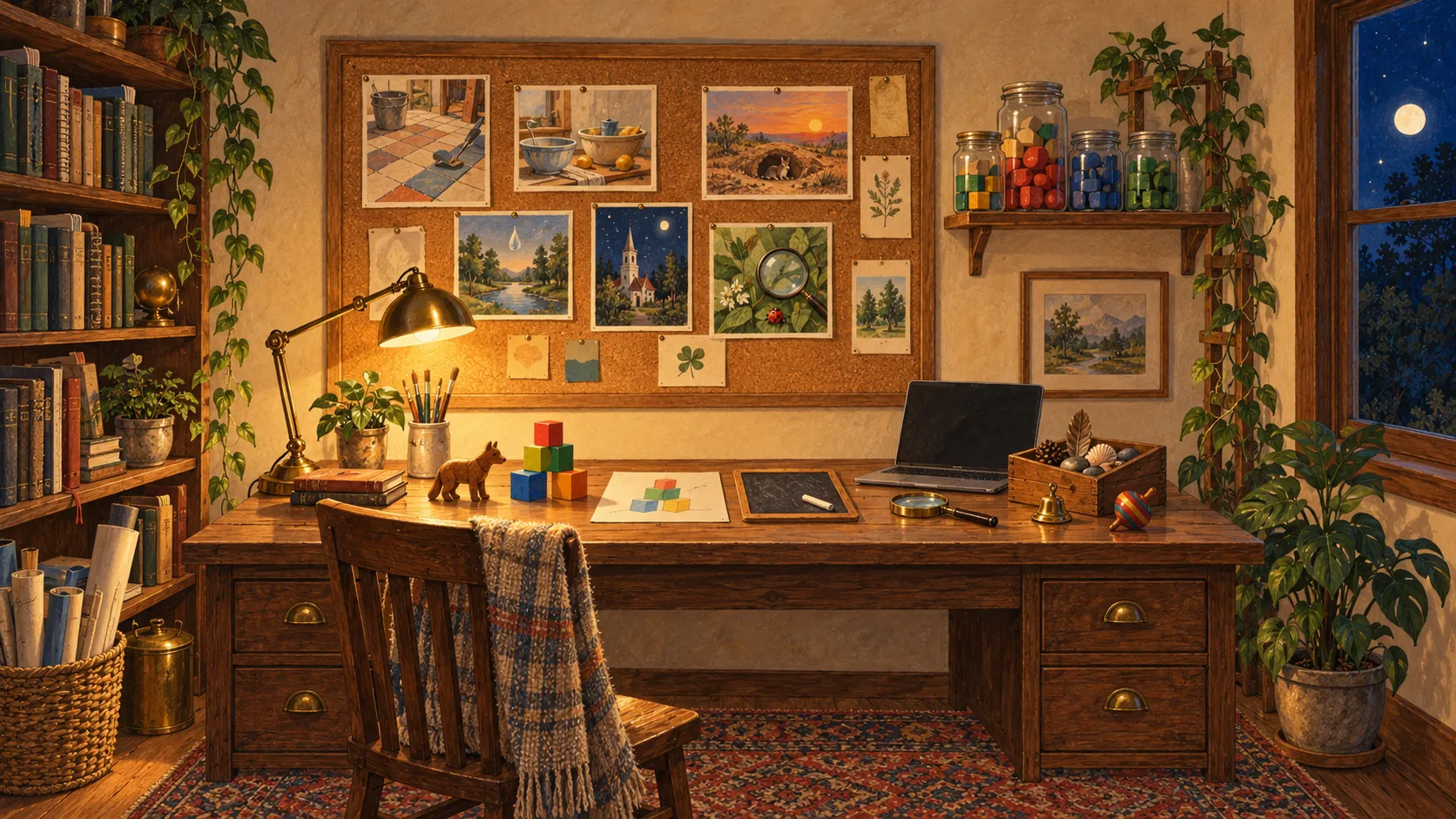
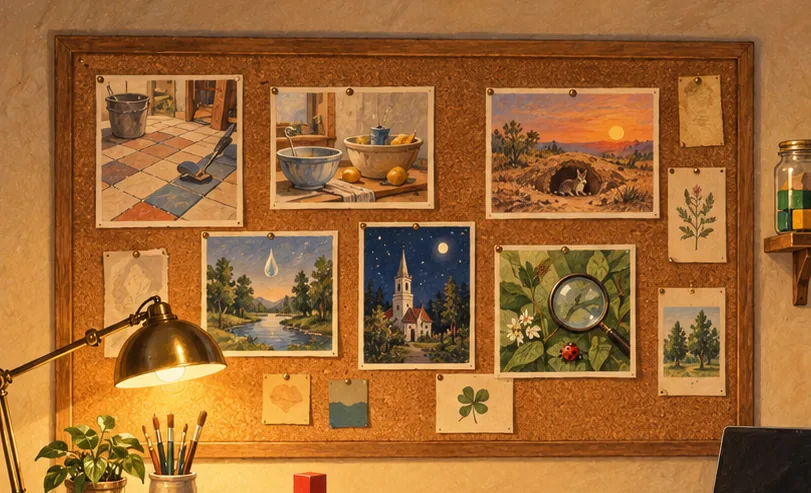
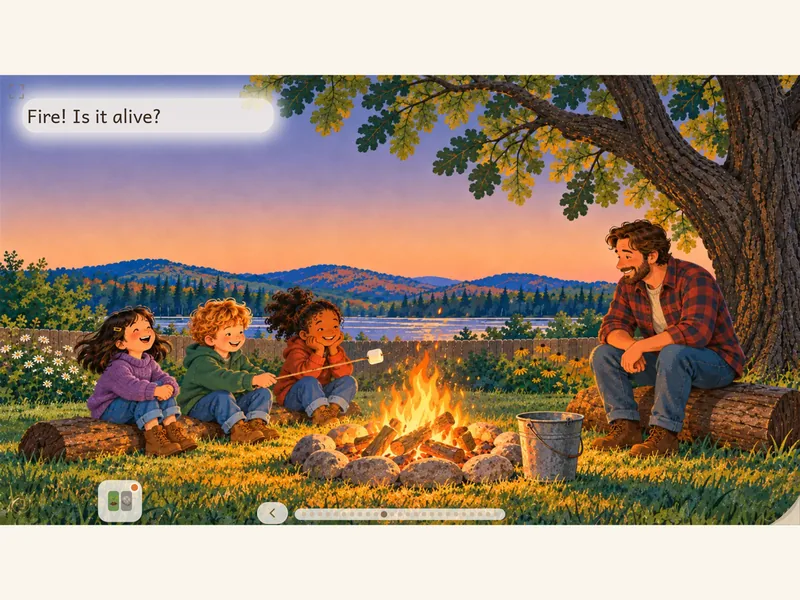
What it means. Every table and book happens somewhere real: a tiler's job site, a kitchen, a desert burrow, a raindrop on its way to the sea. The math or the reading is something you need there, not something stuck on top.
Where it comes from. Talk to any kid about what's going on in their world. Show them you care about it and respect it, instead of telling them the things they're into, the games, whatever's popular right now, don't matter. When we step into their world, you see the difference in how they engage. They start to understand that math, reading and science are connected to all of it. That never goes out of style.
What the research says. When high school students' algebra problems were rewritten around their own interests, like sports, music or games, they learned to write algebra better, and the gains lasted after the personal touch was taken away. Struggling students gained the most (Walkington, 2013). In another study, simply asking students to connect their science class to their own lives raised both their interest and their grades, most of all for students who didn't expect to do well (Hulleman & Harackiewicz, 2009).
Kids explore
What it means. Kids poke, test and try. The answer is something they find, not something they're told. A grown-up is right there, as a guide.
Where it comes from. Just look at any young kid. They're all exploring. Then, little by little, they stop, because school doesn't give them the chance. So let them explore. Let them take the reins a little. That's why this isn't a map, it's a compass. You let them move around. You don't hand them the path.
What the research says. In one study, preschoolers given a new toy explored less and found fewer of its hidden features when an adult had taught them one thing it did, compared with kids who found that same thing by accident (Bonawitz et al., 2011). But leaving kids completely on their own isn't the answer either: across more than a hundred studies, discovery with a grown-up's guidance, feedback and good questions beat both plain lecturing and unguided discovery (Alfieri et al., 2011). That's why every table has a seat for the grown-up.
The whole body learns
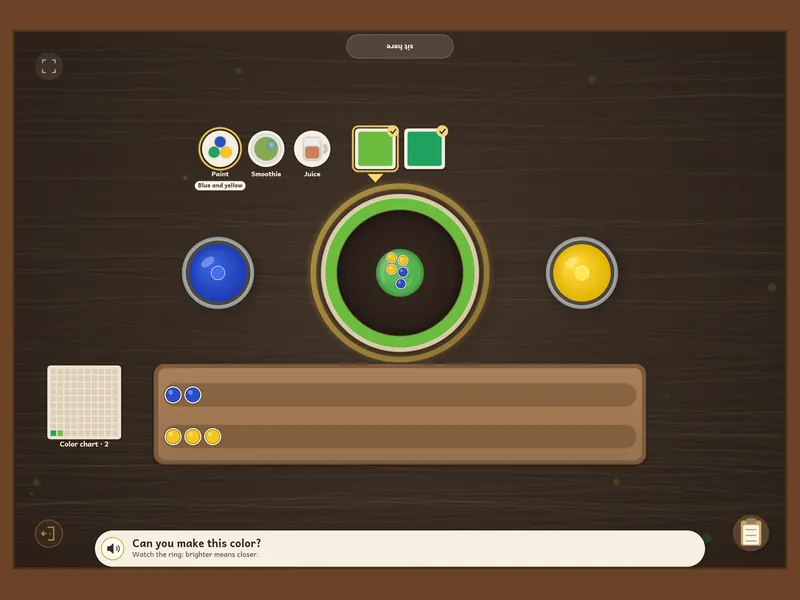
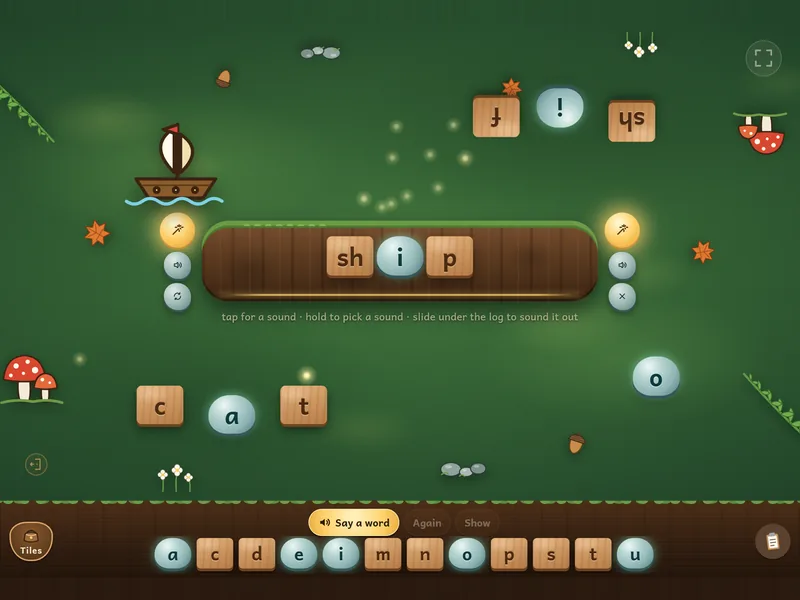
What it means. Seeing, hearing, touching, moving and saying, not just looking and clicking. Letters you tap sing their sound. Tiles you drag click into place. Words you build out loud.
Where it comes from. Getting visuals, getting hands on things, moving stuff around, it makes learning feel real and tangible. It reaches all the senses, and that helps every kind of learner. I taught reading with the Spalding Method in my own 2nd grade classroom, with kids saying, writing and hearing the sounds all at once, and I teach math with hands on real things before anything goes on paper.
What the research says. Children who were asked to gesture with their hands during a math lesson solved more problems afterward, and many came up with new ideas from their own hand movements that no one had said out loud (Goldin-Meadow, Cook & Mitchell, 2009). In reading, the strongest evidence is for the shared core of structured literacy: explicit, step-by-step phonics with steady practice (Stevens et al., 2021).
Play, then hands, then pictures, then symbols
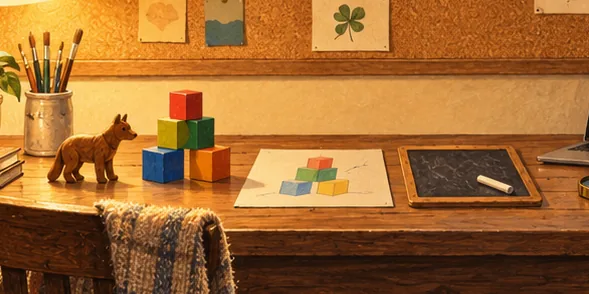
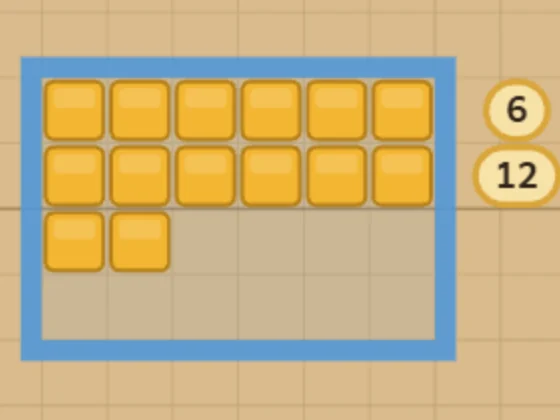
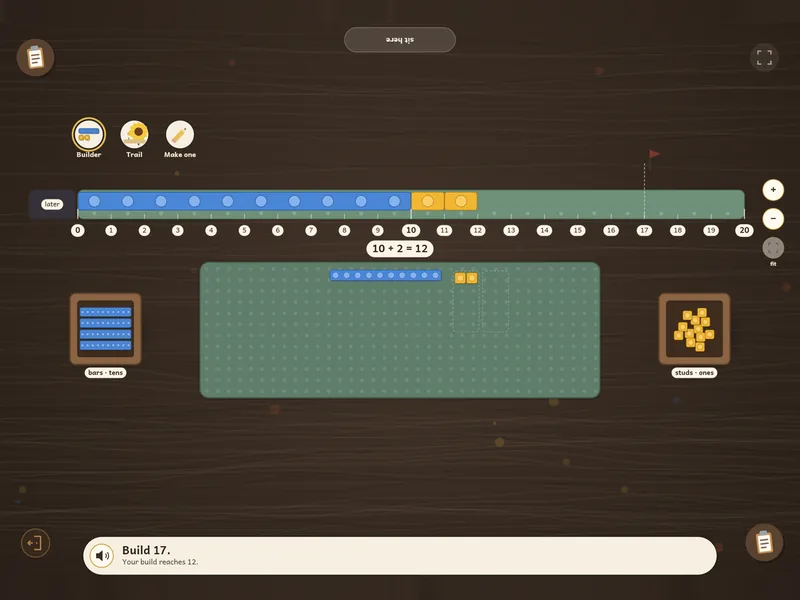
What it means. Every idea starts as something to mess around with. Then you build it with your hands, then you draw it, and only then do you write it in symbols. The hands-on part fades as the idea gets solid, and comes right back when something new gets hard.
Where it comes from. For ten years I was handed the kids the usual way wasn't reaching. Almost every time, the same thing had happened: they'd been rushed to the symbols with nothing underneath. Rebuilding from the hands up is how "I don't get it" turns into "oh, that's all it is." And it grows up with the kid. For a five-year-old it's blocks. For a teenager learning calculus it's imagining you're a scientist zooming in on a flower with a microscope, then zooming back out to see the whole plant.
What the research says. Moving from concrete to abstract on purpose, called "concreteness fading," helps kids understand and carry over what they learn (Fyfe, McNeil, Son & Goldstone, 2014). The U.S. Department of Education's practice guide for math recommends the same path (Fuchs et al., 2021).
A living path, never strict
What it means. Every kid starts small and climbs by their own wins. The path adapts to the kid, to the world they live in now, and to what they care about. A grown-up can make it easier or harder with one tap, and nothing ever marks a kid as behind.
Where it comes from. Every kid sees the world a little differently, shaped by where they live and how they grew up, and every kid is going to find a different path. I love joining them on it. I get to learn too, and see new ways of seeing the world. And the kid keeps the ownership. I've worked with most of the math and reading programs out there, and I've never found one fixed order that fits every kid. So I pick the path to fit the kid, and these tools do the same.
What the research says. Spacing practice out over time, and mixing earlier skills back in, helps kids remember more and tell problems apart (Cepeda et al., 2006; Rohrer, Dedrick & Stershic, 2015). The exact pacing is teaching judgment: it errs slow, and gets tuned with real kids.
Who's behind it
I'm Corey. I taught for ten years, in just about every setting there is:
- special education, as the support person for a whole department;
- middle school math;
- 2nd grade, teaching reading with the Spalding Method;
- seven years at an online school, teaching every grade from kindergarten through high school, with students from all over the world, often from a van on Starlink as I traveled;
- math specialist for the students no one else was reaching;
- curriculum developer.
I hold Arizona teaching credentials in mathematics and in multiple subjects, a B.A. in Art & Architecture from UC Santa Barbara, and an M.Ed. with an emphasis in mathematics from National University.
Everything here is built with kids, tested with kids, and changed when kids show me it doesn't work.
Our honest line
No study has tested these exact tools or books. Research sets the order inside each skill. The weave between skills, the pacing, and what kids see are teaching judgment, and we say which is which.
Read the research →
Sources (checked October 23, 2026)
- Walkington, C. (2013). Using adaptive learning technologies to personalize instruction to student interests: The impact of relevant contexts on performance and learning outcomes. Journal of Educational Psychology, 105(4), 932–945. Summary checked: https://edsurge.com/news/2013-11-08-can-interest-based-personalization-deliver-better-learning-outcomes
- Hulleman, C. S., & Harackiewicz, J. M. (2009). Promoting interest and performance in high school science classes. Science, 326(5958), 1410–1412. https://sparq.stanford.edu/sites/g/files/sbiybj19021/files/media/file/hulleman_harackiewicz_2009_-_promoting_interest_performance_in_high_school_science_classes.pdf
- Bonawitz, E., Shafto, P., Gweon, H., Goodman, N. D., Spelke, E., & Schulz, L. (2011). The double-edged sword of pedagogy: Instruction limits spontaneous exploration and discovery. Cognition, 120(3), 322–330. https://news.mit.edu/2011/teaching-children-0630
- Alfieri, L., Brooks, P. J., Aldrich, N. J., & Tenenbaum, H. R. (2011). Does discovery-based instruction enhance learning? Journal of Educational Psychology, 103(1), 1–18. https://www.fisme.science.uu.nl/publicaties/literatuur/2011_alfieri_discovery_learning.pdf
- Goldin-Meadow, S., Cook, S. W., & Mitchell, Z. A. (2009). Gesturing gives children new ideas about math. Psychological Science, 20(3), 267–272. https://pmc.ncbi.nlm.nih.gov/articles/PMC2750886
- Fyfe, McNeil, Son & Goldstone (2014); Fuchs et al. (2021); Cepeda et al. (2006); Rohrer, Dedrick & Stershic (2015); Stevens et al. (2021): already checked for the research page.